Wednesday, January 27, 2016

The Last Days Before A Recital

Periscope #4
     
Before The Recital

These are some things I covered in the Periscope video on January 26, 2016


  1. Encouraging all students to perform 
  2. How do we over come performance anxiety?
  3. My audience participation piece
  4. My own piece at the recital
The week before recital time can be tough for the unprepared and even for those who have  prepared well. There are countless distractions to throw off our focus. Often the rehearsal before is miserable and then the performance goes off without a hitch.


     I don't have an easy answer to making performing simple. I do, however, know that the more we perform the easier it gets. I take each student into a rehearsal in the venue where we will perform and give them time to get familiar. I like knowing how the piano will work and how the sound blooms. This year we will have another audience participation piece performed by a student. This brings a relaxed atmosphere into the room, helping everyone feel involved. Below is a video by Wendy Stevens who wrote this piece.


   Should a teacher perform at her own recital? I think so. I feel the example of being a constant learner is important. When I anguish over my piece it also helps me be empathetic to the concerns my students have. This year I'm playing Star Dust by Elena Cobb. Below is a video of a beautiful performer who captures the piece expertly. To be honest, I played it on Periscope but the distraction of the video ruined my concentration and I erased the whole video. 


   Next week on Periscope I want to share a few things I learned at a online 88 Keys Winter Webshop this weekend. The subject was How To Teach Your Students Pop Music.

     Periscope is a free app by the Twitter company that allows you to broadcast all over the world. There is no time limit. Viewers can participate by typing messages and questions and by sending hearts for content they like. The recorded broadcast is viewable for 24 hours after airing.


Thursday, January 21, 2016

Recitals In January?

Periscope #3

Recitals In My Studio


These are the ideas I covered in the short Periscope video I did Tuesday January 19, 2016. :
  1. Time of year I hold my recitals
  2. Audience participation
  3. Playing a piece myself at the recital


  Yes, I have a recital in January, not in December, when everyone is pulled in so many directions but in January, the end of January. That gives us a whole month to prepare. 

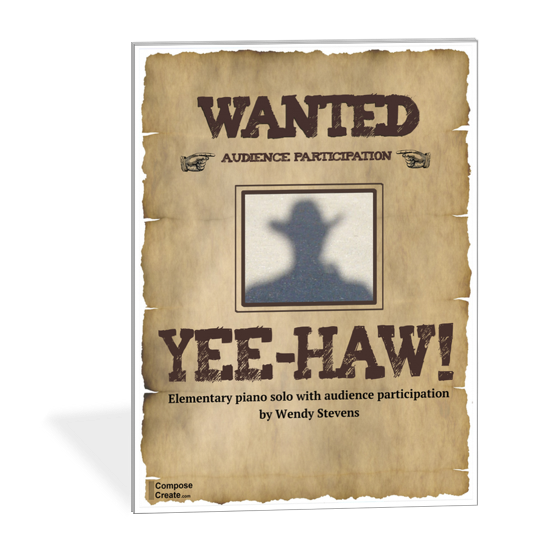
As I have done in the past, I like to have at least one audience participation piece. This year I am drawing from Wendy Stevens, Composecreate.com, and using Yee Haw, a lively beginning piece. The two students preparing this piece thought it looked easy but the rests are tricky. They both struggled at first but when I saw them the next week they had it together. I have not decided if I will have the audience clap or if I will hand out wooden sticks to some of the audience. . 


I play myself at every recital. After more than a hundred recitals what do I play this year?  Well, I happened upon the Dec./Jan. edition of the magazine "The Pianist". The 30 pages of free music is always attractive to me. Stardust by Elena Cobb is just right for my performance. Late intermediate difficulty so it allows me some leeway in preparation time and insuring I will have a polished piece. I played the first page on the Periscope video and promised to play the whole thing next Tuesday morning at 10:30 PST. Come join me!


Periscope is a free app by the Twitter company that allows you to broadcast all over the world. There is no time limit. Viewers can participate by typing messages and questions and by sending hearts for content they like. The recorded broadcast is viewable for 24 hours after airing.
                                                                      

Wednesday, January 13, 2016

Duets


Why Duets?

My second Periscope video was better. I had a good title and I felt like I reached a small audience. Here is a summary of the content of the video.

Providing a duet experience:
  1. Develops a camaraderie between students and sustains the idea of being a musician.
  2. Strengthens the importance of steady beat
  3. Allows for a safe environment to try and fail with a peer and shows how to solve musical problems together under pressure.
Duet Books

  1. Kaleidoscope Duets by Jon George
  2. Celebrated Piano Duets by Robert Vandall
  3. Dusts For Middle Beginners from Opus 149 by Anton Diabelli- Mary Beth Lewis Piano Library
  4. Duet Favorites by Jane Smisor Bastien- The Bastien Piano Library


           How to manage bringing students together

  1. Try a student neighbor overlapping lessons, even if the students are at different levels
  2. Invite siblings to play together
  3. Bring a parent in to play
  4. Teacher student duets are a mainstay for my lessons


        Next Week On Periscope I Talk About Recitals

                          
                        January 19 at 10:30 am PST


Sunday, January 10, 2016

I'm Back

        Does absence make the heart grow fonder?

   I have been missing from blogging land for two years. In those years I continued to teach piano but I suppose I lost my desire to share on this blog. I'm back primarily because of the generous hearts of so many other teachers who continue to give encouragement online. 


    Last week I tried Periscope, an app created by Twitter which broadcasts live all around the world, and I did a video about practice incentives. It was a trial and very, very, few knew about my experiment. I will try it again this Tuesday morning, 01/12/16 at 10:30 am PST. The subject will be duets. You can search for me at GabriB and the broadcast will remain online for 24 hours.


     The incentive I am using in January comes from Compose Create. Thank-you Wendy Stevens for these flash cards which I am also using for practice incentives. At each lesson if my students  practice 100 minutes or more they can receive part of a snowman. As they build they must match the intervals. 
   Length of practice time does not guarantee good practice but it creates accountability to me and to their parents. 


  Join me here or on Periscope where my next topic will be Duets, the value they have and where to find good music.

Friday, January 3, 2014

Practice

My student Danny hit a wall on the Shepard's Song. He just didn't like it and consequently he refused to practice. Weeks went by with my encouraging him to try it one more week. Finally, I felt inspired to challenge him to try an experiment. I promised him, out on a limb there, that if he would play this piece 50 times that he would learn to love it. The next week he had 4 tally marks on his page. We played it through three times during the lesson and added those tally masks to the total. Then, the following week he had a surprise for me.


He was so excited to play. He reached his goal and my promise was true. He loved it. I don't always push through with every song, but I felt the newly arranged version of this piece in "Piano Adventures Level One" was worth the work.


The more you practice the better you play. The better you play the more you enjoy making music. The more you enjoy making music the more you practice. The more you practice the better you play……..


Friday, November 8, 2013

Homemade Scale Foldable

This month's group lessons consisted of rehearsing and videoing the duets, (October was duet month) and making homemade scale foldables. I had two to four students at a time, for one hour. 


  Buying scale books is possible but allowing each child to use the patterns to make their own scale book is child centered-learning. I used colored folders, inexpensively purchased at Amazon, as the shell and the inside varied depending on age. Keyboards can be copied for free from Susan Paradis. (Thank-you, Susan) Scroll down the teaching resources page to Keyboard labels. My students glued the labels on, making dots on the keyboard to illustrate a 5-finger or octave scale, and then with post-it notes made covers for each scale. We will use them at their lessons.


    A even more inexpensive version is to fold two pieces of paper hot dog style, vertical, and then staple them into the folder. After the scales are written in we cut the top fold just under each scale and make a cover. The best part of this process, for me, was listening to them discuss half-steps and whole-steps. It was  keyboard analysis from which each student benefitted.


Wednesday, October 9, 2013

Busy B Word Bubble and Duet Month

   October is duet month. I have tried this before. In the past I ended up playing some of the second parts because getting children together to practice is a scheduling challenge. However, it is working and I purchased some fun pieces to delight my students. One important element this time is that I have determined to get the partners together twice. Once to practice and have a group lesson experience, and once to perform for my video camera. I intend to show my movie during cookie time after my January recital. Duets provide the perfect setting to bring home the concept of the steady beat. Without lecture or nagging, the impotence of feeling the beat moves to the forefront. I have tried to shy away from pairing up siblings. They can annoy each other quickly. Next week I will get together the first batch of duets. I look forward to the process and the outcome.


I found a fun site that will generate a "most often used" word bubble from your blog. The idea it drives home in my mind is that my posts have been dedicated to sharing ideas for learning piano music.
I love the word "beat" right in the middle. I do many things to enhance a steady beat. Make your own word bubble here.